Description
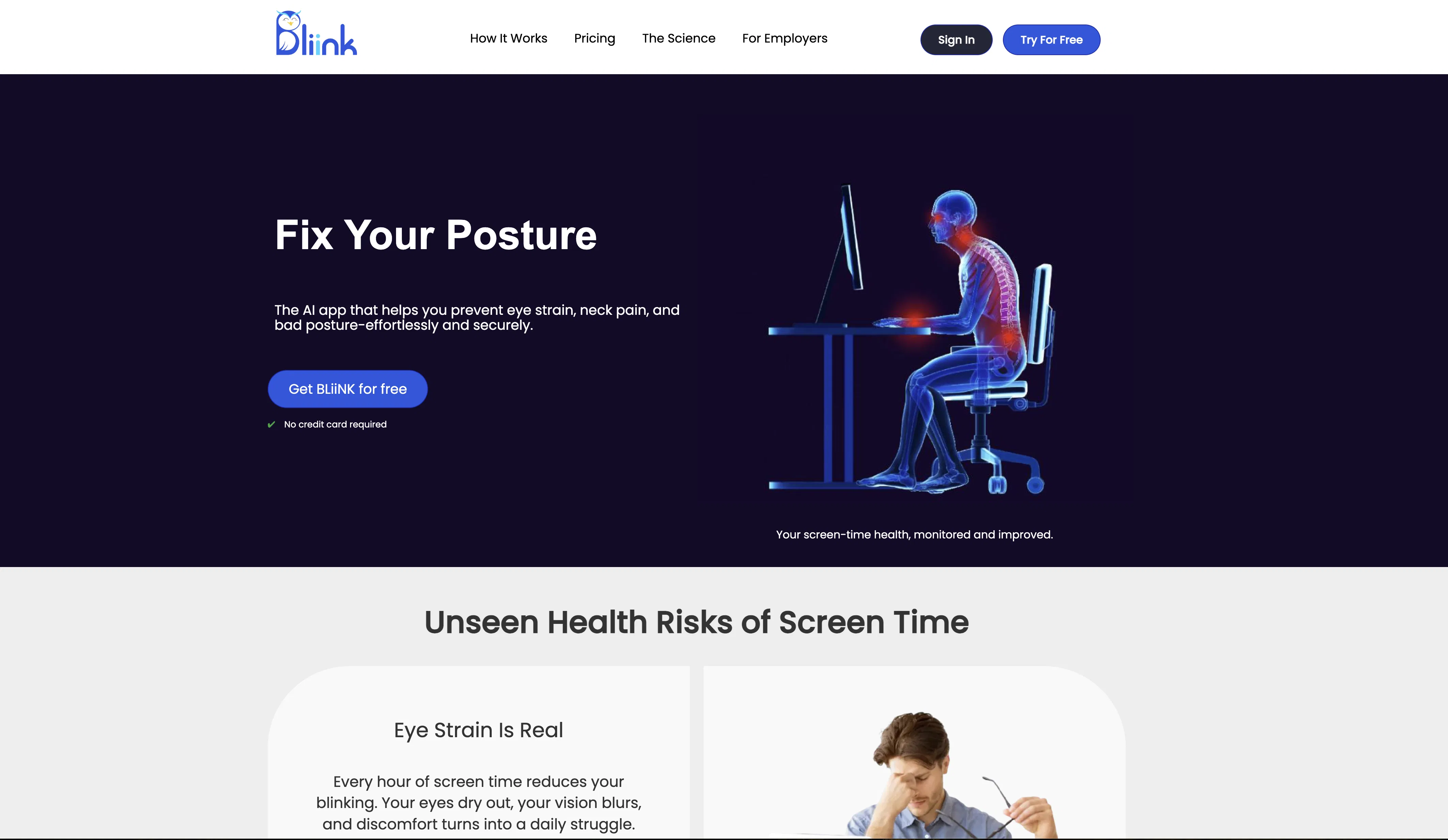
BLiiNK AI is a desktop application developed to enhance the physical wellness of individuals who spend extended periods working on digital screens. It addresses the negative health impacts of prolonged computer use, such as eye strain, poor posture, and mental fatigue, by promoting healthier digital habits. The tool's core value lies in its proactive, AI-driven approach to preventing discomfort before it becomes a chronic issue, making it a valuable companion for knowledge workers, students, and remote employees. Its development focuses on creating a seamless, non-intrusive experience that integrates into the user's workflow to foster long-term behavioral change.
Key features include conducting regular, automated checks on user posture, blink rate, and screen distance using the computer's webcam. It provides gentle, timely reminders to take breaks, adjust seating position, and practice the 20-20-20 rule to reduce eye strain. The app generates personalized wellness reports and insights based on collected data, highlighting trends and areas for improvement. Furthermore, it offers guided micro-breaks with simple exercises and tracks daily screen time metrics to encourage conscious usage and recovery periods.
What sets BLiiNK AI apart is its use of on-device artificial intelligence for real-time analysis, ensuring user privacy as no personal video data is sent to external servers. The tool is designed to be lightweight and runs locally on macOS and Windows operating systems without requiring powerful hardware. Its uniqueness stems from a focus on holistic digital wellness, combining posture correction, eye care, and break management into a single, automated solution. It operates as a standalone application with no complex integrations, prioritizing simplicity and immediate utility for the end-user.
Ideal for professionals in remote or office-based roles who are tethered to their computers for most of the day, including software developers, writers, and customer support agents. It is equally beneficial for students engaged in long study sessions and freelancers managing their own schedules without external reminders. Specific use cases include preventing repetitive strain injuries, reducing digital eye strain symptoms, and building sustainable work habits to improve overall productivity and long-term health outcomes in a digitally-centric lifestyle.